
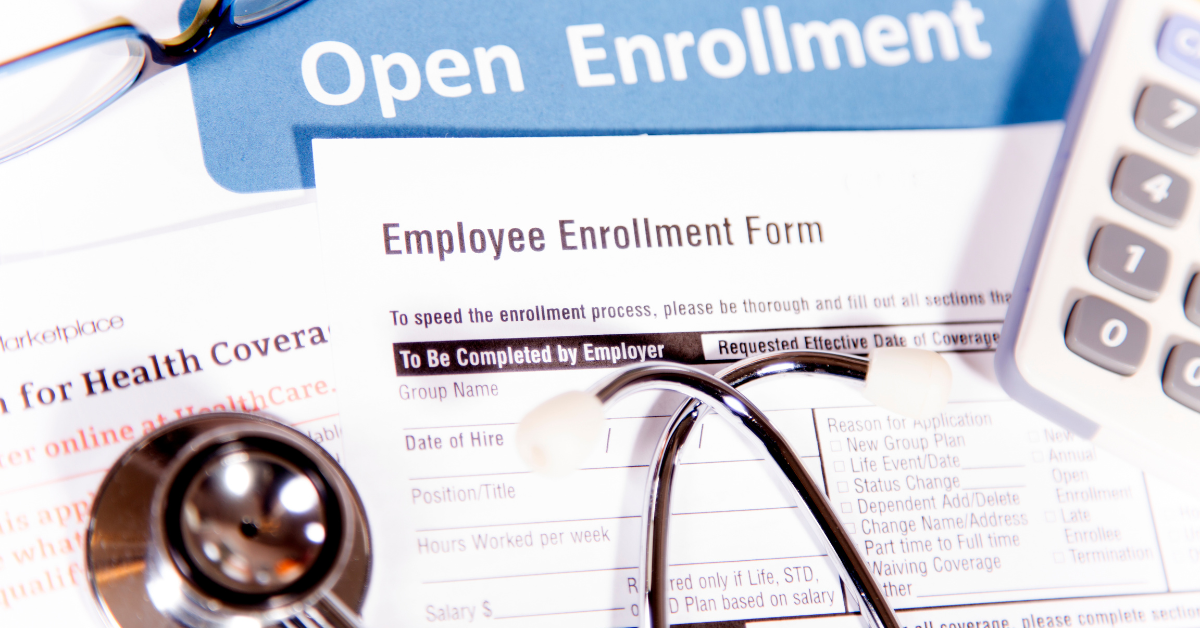
When your business’s open enrollment process is handled manually, it’s easy for mistakes to slip through. Whether it’s incorrect deductions, missed life-event updates, or coverage gaps for employees, these errors often lead to compliance penalties, employee retention issues, and reputational damage.
An automated, streamlined approach to open enrollment ensures personalized healthcare benefits and reduced tax burdens for you and your employees, all while boosting trust and transparency through access to an intuitive, efficient, and user-friendly benefits administration platform.
Common Enrollment Mistakes
Disjointed manual processes or the lack of a dedicated benefits team can easily lead to errors during the open enrollment process, especially when daily operational demands are high. Here are the most common open enrollment mistakes to avoid:
- Missed or delayed deduction updates after enrollment closes – If a deduction update is missed or delayed due to unsynchronized software, late manual entry, or delayed approval, you will need to collect retroactive deductions from each affected employee, create a defensible excuse for each error under IRS Section 125, and dedicate time and labor to resolving an avoidable compliance mistake.
- Employees choosing plans without cost-comparison information – Employees deserve transparency when they consider the ideal healthcare plan for themselves and their family. According to the National Institutes of Health, it’s common for employees to choose a low-deductible plan without properly weighing the impact of higher monthly deductions and total out-of-pocket costs. This is often due to confusion regarding the details of employer-sponsored options.
- Life events (marriage, birth, and dependent changes) reported late to carriers – Employer-sponsored health plans usually allow at least 30 days to report a life event that impacts health insurance coverage. If an employer fails to gather and report this information from an employee during the Special Enrollment Period (SEP), it creates a number of IRS compliance risks, requires employee tax collections (or adjustments), and causes coverage gaps for the employee and their dependents.
- Paper or spreadsheet-based tracking causing version control errors – A manual or spreadsheet-based approach compromises accuracy, causing your staff to update different, unsynchronized versions of benefits-related files. This creates data discrepancies that compound over time and lead to serious payroll inaccuracies, gaps in coverage, and major ACA or HIPAA violations and penalties.
- Lack of a clear enrollment checklist, leading to incomplete elections – Without a clear and thorough enrollment checklist, employees can easily miss key information ranging from dependent documentation requirements, supplemental insurance enrollment information, or FSA and HSA re-enrollment requirements. A lack of clear guidance can snowball into costly premium adjustments later in the year, employee coverage lapses, Form 1095 discrepancies, and employee dissatisfaction due to open enrollment errors.
Why These Mistakes Happen
Costly mistakes occur when enrollment, deductions, and carrier communication all run through disconnected tools rather than one consolidated digital system. Additionally, without a dedicated benefits team to manage open enrollment, non-HR staff often assume responsibility for complex HR and compliance-related tasks.
While focusing on day-to-day operational responsibilities, many businesses unintentionally fast-track the open enrollment process or provide incomplete benefits information to employees. When employees feel rushed or uninformed about the process, this can lead to late submissions, delayed processing, compliance penalties, and employee retention issues due to dissatisfaction with benefits administration as a whole.
What a Unified System Fixes
A unified benefits system streamlines the open enrollment process by dramatically reducing errors, minimizing administrative tasks, and improving engagement, trust, and transparency within your business.
Here’s how Affiliated Payroll & HR optimizes your employee benefits enrollment process:
- Guided enrollment checklist for employees – Using our unified benefits administration platform, your employees gain access to a comprehensive enrollment checklist featuring benefits plan comparisons and other user-friendly resources that simplify every aspect of open enrollment.
-
- Cost comparisons during enrollment – As your employees navigate our platform, they’ll see clear cost comparisons to expedite open enrollment and keep them fully informed when choosing the right healthcare for themselves and their families.
-
- Direct carrier connections for life-event updates – Bypass delays through direct connections with carriers. Whenever a life-event update occurs, you can immediately report it, keeping you and your employees on track with SEP requirements.
-
- Centralized plan and deduction records – Eliminate disjointed recordkeeping and version control errors by consolidating all of your data, including plan and deduction records, in one place.
-
- Minimize benefits compliance errors – Benefits administration is especially difficult for small businesses focused on growth and demanding day-to-day operations. Keep compliance errors and penalties out of the picture with compliance monitoring to flag errors, pinpoint data discrepancies, and provide deadline notifications.
Whether it’s using pre-tax elections to lower employees’ taxable income and reduce tax liability, or offering clear guidance on choosing the right supplemental insurance, our unified platform simplifies the process for you and your employees.
Why Texas Employers Are Choosing a Unified Benefits System
Entrepreneurial activity continues to grow in Texas, a state that consistently ranks in the top 3 nationally for new business formation. Although this economic environment is ideal for small businesses, many businesses lack the HR staff or digital tools to manage benefits tracking as they expand. This is especially true for Texas small businesses with workers operating remotely or in multiple jurisdictions where carrier networks may vary.
Affiliated HR & Payroll offers a unified benefits platform that reduces manual tasks, synchronizes data, simplifies life event reporting, and ensures compliance for Texas employers, including those with workers operating across local and regional jurisdictions. Paired with years of experience supporting Texas small businesses, we offer the local expertise and leading-edge tools you need to grow at scale, free of compliance-related headaches.
Improve Enrollment, Engagement, and Long-Term Compliance with Affiliated HR & Payroll
Open enrollment is a short but high-stakes window to improve employee retention, engagement, and satisfaction. When the process is mishandled due to outdated tools or a lack of professional guidance, it can lead to a range of financial, workforce management, and compliance issues that detract from business growth.
Get ahead of enrollment challenges before the next cycle and boost transparency and trust among your workforce. If your team is preparing for this year’s open enrollment and wants to simplify the process, we’re here to help.
Schedule a Conversation Today to get started.